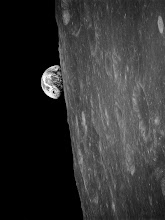
Monday, October 27, 2008

[H{e(art)]h}


H
eart)h
I'm beginning to detect a theme, and it includes something that I've wanted to share for a while (the novelty of words). Think about the macro/micro relationship again. The heart is to the Person as the hearth is to the home as the earth is to the . . . what, universe. . . Or should it be solar-system?  Why wouldn't we call the sun the heart?  Well, blockhead, where is the poetry in that? The earth is something special to be sure, but I don't think I could justify its heartness in its system -(There are a bunch of dudes that will go on about the galactic center, the cosmic center of the milky way, and cite it as the important vessel.  I read galactic center more womb(y).)

So we watched Iron Man last night, and also Disney's Atlantis - The Lost Empire recently. "Hearts" are coming at me.  We are planning on watching Hearts in Atlantis tonight. You know, plumb the depths. . .

Do you remember the chakras? They can also be called the Seven Lotus Centers of the Kundalini. I'll give you an image, but if you are lost, I suggest that you read my post entitled "Eden". 

I don't want to kill you with details even though I know that is how you feel right now.  Suffice to say, there is a lot of information one could impart about each of the chakras.  The point, and this is how some people answer "the question"(the purpose of life), is the climbing of this ladder. Do you need an image?  Joseph Campbell loved and showed lots of snake-climbing images.  Here is an image along w/ Lilith for good measure.


Where I'm going with this is to a quote by Joseph Campbell.  His point is important because it is an explanation of the first three chakras and what they mean to existence.  Each of us makes this journey (symbolically/metaphorically) as we grow, but the world as whole is undergoing this journey as well.  He speaks to the functions and results of the first three chakras:

These, and these alone [the first three chakras], have supplied the motivations of historical man, his effective moral systems, and his nightmare of world history. They are the centers of the basic urges, furthermore, that mankind shares with the beasts -- namely, (1) to survive alive by feeding on other lives, (2) to generate offspring, and (3) to conquer and subdue. Unrestrained by any control system, these become devastating, as the history of the present century surely tells. For as declared in the Indian Arthasastra, "Textbook on the Art of Winning": "When uncontrolled by virtue (dharma) and the big stick (danda), men become wolves unto men." The Inner Reaches of Outer Space, pg. 63-64 by Joseph Campbell, St. James Press, Toronto, 1986.
There is a bit of rumble that humanity is ready to rise to the next level--level four, the chakra located at the heart. And so this is why I'm seeing images of tin men everywhere, maybe. What did the Tin Man need? What was the defining feature of Iron Man?  The answer is the heart. The heart of Atlantis in the Disney animated feature is a crystal, which Eckhart Tolle describes as an "enlightened" rock--yes I'm last person in the world to begin reading him, and what is his new book called?  A New Earth (I don't care, I'm going to read the earth hearty.  The sun pumps the solar blood, but the earth is heart-like in its way.)
So now we have got the serpent started: let us follow her up the spinal staff, which in this yoga is regarded as the microcosmic counterpart of the macrocosmic universal axis, its lotus stages being thus equivalent to the platforms of the many-storied ziggurats, and its summit to the lofty marriage chamber of the lunar and solar lights. The Mythic Image, pg. 334 by Joseph Campbell. MJF Books, New York, 1974.

"And so we ascend to chakra four, at the level of the heart, where what Dante called La Vita Nuova, 'The New Life,' begins." (356) The Mythic Image.

This is another theme coming at me. The New World,  The New Age.  2012! Do you know what the coolies were drinking during the summer of 2008? A light bubbly wine on ice with lime. The wine?  New Age.


So, to restate,  one can read the climbing of the lotus ladder a few ways.  One way is as a metaphorical journey that everyone takes as they age and mature.  Another way is literally.  A yogi actually feels this serpent power come to life and begin rising literally! One can supposedly feel the heat at the chakra where the serpent energy or kundalini is and cold where it (she) was. This journey is both physical and spiritual though.  The people whose crown chakra opens like a thousand petal lotus have names like Jesus, Buddha, Mohammed, etc. 


If you are interested in this stuff, check out any Joseph Campbell.  He makes it pretty accessible. I like his The Inner Reaches of Outer Space as a starting point.  It encapsulates his whole deal, but does so in a fairly concise manner. I'm tempted to describe the individual chakras more, but I guess I'll hang back for now.

And my point?  My point has to do with the whole behaving like the part (a fractal).  Not only does an individual climb Jacob's 7 stepped ladder to heaven, but so does the world.  This is what Tolle's book is all about--a mass flowering/blossoming of humanity.  Are we seeing the signs of the world about to open its heart chakra collectively?  Look, and you too will begin seeing Tin Men everywhere. Last night my daughter watched The Iron Giant before bed, and two weeks ago my wife painted this: I didn't really understand it at the time, but now I think it makes perfect sense. Onward to The New Age. To The New World, Ho!


Saturday, October 25, 2008

lest you forget the truth, shipmates. . .


The answers to your questions can be found here and possibly here.


Friday, October 24, 2008

nirvana(?)

nirvana |nərˈvänə; nir-|
noun Buddhism
a transcendent state in which there is neither suffering, desire, nor sense of self, and the subject is released from the effects of karma and samsara. It represents the final goal of Buddhism.
• Hinduism liberation of the soul from the effects of karma and from bodily existence.
• a state of perfect happiness; an ideal or idyllic place : Hollywood's dearest dream of small-town nirvana.
ORIGIN from Sanskrit nirvāṇa, from nirvā 'be extinguished,' from nis 'out' + vā- 'to blow.'

Wednesday, October 22, 2008

8 is a gate? (∞)


This past weekend I was thinking about Zeus, the fool's journey through the Tarot, fathers, and obviously the upcoming election. Take a passage like this:
Then, like Zeus himself, we must overthrow the old rule and inaugurate and newer and more creative one, lest we become petty tyrants ourselves or fall under the spell of a tyrant in the world outside. Having discovered the rich and fecund world of the body's needs and pleasures, the Fool must now find ethical principles by which to live; for without the Emperor, we are mere pawns in life, driven from within and without by blind instinct, blaming our problems and difficulties on other people and on society, because we cannot find the inner experience of strength which the father embodies (29).
from:
by Juliet Sharman-Burke And Liz Greene
Fireside, New York, 1986

If one was to vote purely symbolically, the only choice would be Obama. He purports himself to be the candidate of change in opposition to the tyrant whose spell we fell under. We need change. I don't like betting my hopes for the future on the actions of politicians or even on reality per se, but I am definitely going to cast my symbolic vote. Consider his logo:


I could only see the "O" for the longest time. I couldn't see the negative space of the thing. I liked the idea of the "O" because symbolically it could be the gate we will pass through. Perhaps this is our exit from The Belly of the Whale? (I'll get there, I swear! A proper consideration of the darkness probably is suited for the winter though, right?)  Are the white stripes whale ribs and is the red muscle? Is this our exit from the underworld?

Could Obama be the symbolic gate through to the next phase of the infinite cycle? Remember the world?


Or, is he the rising Sun? Do you see the blue sky?  Can you see our life giving sun in the negative space of his "O"? Have we endured The Dark Knight and now the sun rises on a new day? Is this our symbolic dawn?  I hope so.

Sunday, October 19, 2008

fool's journey


"On an inner level, Dionysos, the Fool, is an image of the mysterious impulse within us to leap into the unknown. (19)"


"The Fool meets the Magician only after he has braved the precipice, for the visitations of the inner guide do not come when one hides safely within the maternal cave. (23)"


"Through this card [the Empress (Great Mother)] we enter the realm of the body and the instincts, as a place of both peace and stagnation, life-giving and life-suffocating. Thus the Fool, the child of heaven, discovers that he lives in a physical body and is a creature not only of spirit but also of earth. (26)"
On an inner level, Zeus, The Emperor, is an image of the experience of fathering. It is the father who embodies our spiritual ideals, our ethical codes, the self-sufficiency with which we survive in the world, the authority and ambition which drive us to achieve, and the discipline and foresight necessary to accomplish our goals. This masculine principle within both men and women differs from the nurturing and unconditional love of the mother whom we met in the card of the Empress. Here it is the spirit, not the body, which is accorded the highest value, and action, rather than intuitive flowing with nature, which is demanded of us (28).
The father within us also fosters self-respect, because it is this part of us which can take a standpoint from which to meet life's challenges. Zeus could be compassionate, and championed the weak and the dispossessed. But he could also be angry and vindictive if his authority was challenged and his laws broken. Thus Zeus, the Emperor, has a darker face, which is expressed on an inner level as rigidity and implacable self-righteousness. To be in relationship with the inner father means to possess a sense of of one's potency, one's capacity to initiate ideas and concretize them in the world (28-29).

". . . To be dominated by the inner father means to be enslaved by a set of beliefs which crush all human feeling with their inflexibility and arrogance. (29)"
Then, like Zeus himself, we must overthrow the old rule and inaugurate and newer and more creative one, lest we become petty tyrants ourselves or fall under the spell of a tyrant in the world outside. Having discovered the rich and fecund world of the body's needs and pleasures, the Fool must now find ethical principles by which to live; for without the Emperor, we are mere pawns in life, driven from within and without by blind instinct, blaming our problems and difficulties on other people and on society, because we cannot find the inner experience of strength which the father embodies (29).
from:
by Juliet Sharman-Burke And Liz Greene
Fireside, New York, 1986

Saturday, October 18, 2008

afterworld


A naked woman or hermaphrodite hovers or dances above the Earth holding a staff in each hand, surrounded by a green wreath, being watched by various creatures. In older decks, these are usually a human face or head, a lion, an ox, and an eagle, the symbols of the four Evangelists, Matthew, Mark, Luke, and John. It also holds reference to the vision of Ezekiel in the old testament. This is a reference to the all-encompassing knowledge of the Bible, the Word of God. Later decks avoid such blatant Christian symbolism, or ignore it altogether, choosing to explain these observers as representatives of the natural world, or the kingdom of beasts. An alternative explanation is based on astrological symbolism. The human face, bull, lion, and eagle represent the fixed signs of the zodiac, Aquarius, Taurus, Leo, and Scorpio. In some decks the wreath is a basilisk (crowned reptile) biting its own tail; this basilisk is also sometimes called an Ouroborous.

In some decks, this card is also called "The Universe."

Interpretation

The World represents an ending to a cycle of life, a pause in life before the next big cycle beginning with the fool. The figure is at once male and female, above and below, suspended between the heavens and the earth. It is completeness.

The woman is surrounded by a wreath, representing water; a hawk, air; a lion, fire; an ox, earth; and a male figure as a spirit. Together, they make up the five elements. The four figures in the corners of the card are also referenced in the Book of Revelation, 4:7, "And the first beast was like a lion, and the second beast like a calf, and the third beast had a face as a man, and the fourth beast was like a flying eagle." . . Wikipedia


The Ouroboros, also spelled Ourorboros, Oroborus, Uroboros or Uroborus (pronounced /ˌjʊəroʊˈbɒrəs/ or /ʊˈrɒbɔrɔs/), is an ancient symbol depicting a serpent or dragon swallowing its own tail and forming a circle. It has been used to represent many things over the ages, but it most generally symbolizes ideas of cyclicality, unity, or infinity. The ouroboros has been important in religious and mythological symbolism, but has also been frequently used in alchemical illustrations. More recently, it has been interpreted by psychoanalysts, such as Carl Jung, as having an archetypical significance to the human psyche.

The name ouroboros (or, in Latinized form, uroborus) is Greek ουροβóρος, "tail-devourer". The depiction of the serpent is believed to have been inspired by the Milky Way, as some ancient texts refer to a serpent of light residing in the heavens. . . Wikipedia


The word yoni (Sanskrit योिन yoni) is the Sanskrit word for "divine passage", "place of birth", "womb" in the sense of 'source of life' rather than a human organ, or "sacred temple" (cf. lila). The word also has a wider meaning in both profane and spiritual contexts, covering a range of meanings of "place of birth, source, origin, spring, fountain, place of rest, repository, receptacle, seat, abode, home, lair, nest, stable" (Monier-Williams). The yoni is also considered to be symbolic of Shakti or other goddesses of a similar nature. . . Wikipedia


In astrology, there are four fixed signs.

Fixed Signs are at the height of the four seasons. Fixed Signs are associated with stamina, perseverance and strength and said to be, by nature, inert. However, they are also associated with inflexibility. Individuals born under the four Fixed Signs of the Zodiac are thought to be determined, powerful, natural leaders, purposeful, reliable, loyal and self-confident but also occasionally stubborn and immovable, with a tendency to get stuck in ruts. They supposedly pursue their goals with dogged persistence and have a great power of concentration. According to astrologers, Fixed Signs tend to direct their energies inward rather than outward.

In Hermeticism, Kaballah, and some forms of esoteric Christianity, the four fixed signs are thought to correspond to the four tetramorphs in the prophet Ezekiel's vision or the four leading tribes of Israel: Judah of the East, Reuben of the South, Ephraim of the West, and Dan of the North. They are also thought to correspond with the four Gospel evangelists: Matthew (Christ the master), Mark (Christ the servant), Luke (Christ the human), and John (Christ the divine).

The four fixed signs of the Zodiac are:

  • Taurus : Being an Earth sign , Taurus is said to be the most stable, patient and determined of all the Fixed Quality Signs.
  • Leo : As a Fixed Fire sign, Leo individuals are said to burn with a greater intensity than the other two Fire Signs. They are supposedly much less impulsive than Aries natives and not as prone to "wanderlust" as Sagittarius subjects.
  • Scorpio : A Water sign, of the Fixed Quality, Scorpio is thought to deeply internalize emotions and pursue goals with keen insights, perception and much willpower.
  • Aquarius : An Air sign, while generally considered to be a spontaneous and erratic Sign, many astrologers also agree there is a distinct lack of flexibility in Aquarius character due to their Fixed Quality. . . Wikipedia

Macrocosm and microcosm is an ancient Greek schema of seeing the same patterns reproduced in all levels of the cosmos, from the largest scale (macrocosm or universe-level) all the way down to the smallest scale (microcosm or sub-sub-atomic or even metaphysical-level). . . Wikipedia


"This zoom into the infinitesimal depths of the Mandelbrot set shows how the holographic principle, the principle that the macrocosm is in the microcosm, lies at the mathematical and logical foundation of all reality."


In mathematics, the Mandelbrot set, named after Benoît Mandelbrot, is a set of points in the complex plane, the boundary of which forms a fractal. . . Wikipedia


A fractal is generally "a rough or fragmented geometric shape that can be split into parts, each of which is (at least approximately) a reduced-size copy of the whole,"[1] a property called self-similarity. The term was coined by Benoît Mandelbrot in 1975 and was derived from the Latin fractus meaning "broken" or "fractured." . . Wikipedia

"An extremely deep dive into the mandelbrot zoom. If the final frame were the size of your screen, the full set would be larger than the known universe."


Wednesday, October 15, 2008

afterword

"guardian, protectress" (?)


Do you remember Lilith? You know, the sexy snake lady.
I will remind you. . .

Earlier this summer, my daughter became enamored of another snake-lady. She is a sucker for "hero's journeys" and I've been reexamining my childhood. Anyway, we both we're very taken with Ray Harryhausen's 1981 Clash of the Titans.

Here is the snake-lady as she appeared in the film with her creator:

Here she is as rendered by my daughter:

And here she is in the film when she looses her head!


In Greek mythology, Medusa (Greek: Μέδουσα (Médousa), "guardian, protectress"[1]) was a monstrous chthonic female character; gazing upon her would turn onlookers to stone. She was beheaded by the hero Perseus, who thereafter used her head as a weapon[2] until giving it to the goddess Athena to place on her shield. In classical antiquity and today, the image of the head of Medusa finds expression in the evil-averting device known as the Gorgoneion.[3] She also has two gorgon sisters. . . Wikipedia


Medusa, originally a beautiful young woman whose crowning glory was her magnificent long hair, was desired and courted by many suitors. Yet before she could be betrothed to a husband, Poseidon (Neptune) found her worshipping in the temple of Athena (Minerva) and ravished her. Athena was outraged at her sacred temple being violated, and punished Medusa by turning her beautiful tresses into snakes and giving her the destructive power to turn anyone who looked directly at her into stone.

Some scholars believe that the Greek and Roman Medusa myth, as told by Ovid, expresses the vanquishing of the great goddess religions as the male gods Zeus/Jupiter and Poseidon/Neptune gained power. Others view it as expressive of the subjugation of women's bodies and enslavement of their spirit by a violent and oppressive male-oriented culture, which viewed Medusa's life-giving, creative, primal energy as threatening.

Psychoanalytic interpretations of the Medusa myth focus upon Medusa's snake-like hair representing bleeding female genitals, and the frightening power of the wounded (perhaps "castrated"), devouring mother over the fragile male psyche. Seeking his own manhood, the son must conquer his early identification with his mother and his regressive tendency to submit to maternal power and be swallowed up again by the womb. In order to avoid being symbolically castrated himself, and to be capable of mature sexual relations with a woman, he must first "behead" the mother archetype. Only then is he free to express his own power as a man, to form an equal partnership with a woman, and to eventually be helper to his own mother. . . Medusa in Greek Mythology


So we are back to Freud huh? Do you read the above symbolic interpretation of Medusa as psychobabble or something intriuging? I like the idea that the snake woman you must conquer is your mother. We all have to get beyond our parents to have a life of our own. We have to challenge their beliefs to see if they really are our beliefs. And I suppose we do have to kill our central female figure in order to take another central female. How come the girls I always end up with are so snakey? I guess I have a type huh?

I'm using the font Futura. Does that tickle you at all? The following video should explain that.


Lately (the past couple years) I've been thinking that all stories are family stories--that the family is everything; that it is the important macrocosm; that family is the thing that makes us us, good and bad, through nature and nurture, that we all must face and deal with and that Freud's insights are the tools needed to understand the symbols in the great fictions.

Wes Anderson is one of the great practitioners of "family fiction". In a year of great darkness (There Will Be Blood, No Country for Old Men, Atonement) Anderson created a tiny bit of light that I don't think many people understood. I want to talk about its symbols a little bit because it contains a pretty good metaphor of life and has a couple scary snake ladies in it as well!

At the beginning of the film we find two men running for the train, one young and one old. They are running for The Darjeeling Limited. (I'm skipping the short that preceded the film. It is important and instructive but not part of the film proper.) Do you notice what the younger man, Adrien Brody, is carrying? He carries his father's bags. He and his brothers carry their father's baggage literally and emotionally throughout the whole film until the very end.  They wear the same clothes the entire film. What are in the those bags?  The bags are beautiful, and have their father's initials on them, but they obviously don't need them.

The beginning of this film is so beautiful. Bill Murray, one of Wes Anderson's symbolic fathers can't run fast enough to catch the train. Adrien was able to catch it, but Bill couldn't run fast enough. And the metaphor? The train is life. Riding the train is to be alive, but it is also to be part of something, such as a family.  The businessman (Bill Murray), although not Adrien Brody's character's literal father, is his symbolic father. 

This is one of the issues the boys deal with in this film. Though they set our on a spiritual quest to "find" their mother, they all are still really dealing with the death of their father. That is one of the events that put the family into disarray. Their motivation for the trip though has to do with their perceived abandonment by their mother, Angelica Huston, who is Wes Anderson's sybolic mother. She is "the mother" in all his movies.

This movie is about these boys growing up.  More importantly, this movie is about these boy transcending their parents, or their "threshold guardians".  The mother in this film is the "man eating tiger".  It is implied that she ate their father.  Of course, notice the name of the train the boys ride at the end of the film.  Notice its color as well!

One of my fascinations lately has been how birth order contributes to personality.  More specifically, I've been noticing that some children behave more like the mother and others in the same family more like the father.  The pattern I've been seeing is that the eldest often behaves like the father, and that the middle child can be more like the mother.  In The Darjeeling Limited this is switched.  We don't necessarily know this until the end.  Francis is the eldest and the most dominant, but we don' know that he is behaving like his mother until the end of the film.  

The clue of course is Adrien Brody's character who is the middle child.  He is affecting his father throughout the film to his brothers displeasure.  He wears his father's prescription glasses to the point of headache.  He carries his father's keys, and he shaves with his father's razor.  He desperately wants to understand "father" as he is about to become one.  But what is he doing in India with a pregnant wife who is due in six weeks?

Let's consider Jack.  He is the third child.  And the third child is interesting in terms of birth order in families of three because oftentimes they aren't easily recognized as one parent. They are the baby, but received the least amount of parental attention growing up anecdotally.  You know, the first child has books of photos, and the last might have one.  I suppose the exception to this is if the third child is a girl after two boys.  (And what about the family of four?  Naturally, one should look to The Godfather.  The fourth is "the savior". Zeus was the baby of his family too.)

So Jack, played by Jason Schwartzman, is the baby in the film.  He tries to understand his place through thinly fictionalized accounts of his life in story.  The women he chooses are awful to him and often come and go at their pleasure.  Why would he allow this?  Why would he seek out girls like this?  This is a feedback loop.  For him to overcome (and forgive) his mother he seeks relationships similar to his relationship with his mother.

All the boys need to overcome their mother.  Why did she abandon them?  How could they not take it personally?  Why didn't she come to their father's funeral?

How do the boys deal with this abandonment?  Remember "the middle way"?  That is administering one's drug of choice to cut the edge off reality.  They use booze, smokes, and Indian cold medicine and pain killers that one doesn't need a prescription to buy.  It seems almost ridiculous in the film, but reflects reality actually.  Who wants to face the truth of existence?  What does it mean?  Where can one hide from this apparent meaninglessness?

The last name of this family is Whitman.  This is an interesting point too.  That means "white man".  What are these "white men" doing in a foreign land?  Is this totally cliché for the "white man" to seek "the truth" in a foreign country?  The importance?  I think Wes Anderson was trying to bring East and West together?  Perhaps, the mother, was also symbolized by the unknowable east, by India.  She is the foreign country the boys were trying to understand and navigate to find themselves.

Do you remember Pingala and Ida?  Adam and Eve?  I was calling them the "threshold guardians".  They were the snakes on the caduceus.  Well aren't trains kinda snakey?  This was my favorite little metaphor in the movie.  These boys sought and needed reconciliation with their mother.  They were riding a blue train.  Think lunar, feminine.  The train was their mother, Eve, Ida.  They needed to grow up though, and become men.

Notice the music Jack plays when they get booted off the blue train?  It is Debussy's "Clair de Lune".  The music at the garage is also western, classical music.  Think white!  Their world is western and white and they understand it in those terms.  The Indian music throughout the film is one other element that makes this journey foreign.

The train conductor is another interesting character.  He is "the father" on the blue train. When the boys get in trouble for the snake, (interesting!) he grounds them.  Wes Anderson constantly stages moments in his movies where characters take on the feel of children being scolded by a symbolic parent.

At the end of the film the boys bury a peacock feather together.  There was a lot of funerals in this film.  One of the things they needed was a proper funeral for their father. Although we are not sure, it is implied that they missed their father's funeral while they were at the garage.  Of course when they covered the Porsche there, that was a funeral of sorts too.

The Peacock feather is really intriguing though.  The peacock is a symbolic bird for "the goddess", and it is also the national bird of India.  But!  The gender of what we think of when we think of "peacock" is male.  So,  at the end, when they bury the peacock feather, are they burying their father, the mother, or both?  Probably both.  It is in this ceremony that they lay their father to rest, and forgive (kill?) their mother.  They fear the man-eating tiger no more.  She is gone.  They have transcended the temple guardians.

We know this for sure because the red (masculine) train they ride is called "The Begnal Lancer".  Talk about invoking Frued, eh?  This is Pingala.  They even had to drop their father's bags to catch this train.  To live, they had to get past their parents.  And the song as they run to the train?  "Powerman".  It is a great moment in the film.  They are fully alive.  I'd show it if I could, but I can't find any pirated youtube.  Sorry.  Guess you will have to just go and and watch the movie yourself.